Home » Archives for John Wijngaards

Author: John Wijngaards

Open letter to Cardinal Burke

AN OPEN LETTER TO CARDINAL BURKE AND HIS ALLIES

by Dr Aaron Milavec – 6 December 2021

Dear Cardinal Burke and loyal allies,

Please examine Acts 10. Peter prays and has a vision. Three times he says, “By no means, Lord; for I have never eaten anything that is profane or unclean.” Then, a short time later, Cornelius, a Roman Centurion, invites Peter and six of his companions to visit him. Something changes inside Peter while he is on his way. He knows that, if he accepts to stay with Cornelius, that he will be invited to eat from his table. This is tearing him up. If he takes his stand for the tradition, he cannot eat from this unclean table. Not to accept his hospitality, on the other hand, will be a slap in Cornelius’ face–treating him as someone unclean. So what will Peter do??? When he arrives, Peter greets this Roman Centurion saying, “You yourselves know that it is unlawful for a Jew to associate with or to visit a Gentile; but God has shown me that I should not call anyone profane or unclean.” Yipes! Peter confesses his “change of mind” but now the issue is not just “unclean food” but “unclean associations” as well.  What happened? How could Peter dare to drop the tradition that was held sacred by the Israelites for more than 1200 years?

So, Cardinal Burke, you wish to be counted among those who resist the changes made by Peter. I can understand this. In Acts 11, Peter returns home (Jerusalem) and we learn that the circumcised believers criticized him, saying, “Why did you go to uncircumcised men and eat with them?” So you wish to endorse the position of the nay-sayers in Jerusalem.

This is a parable for our times. Pope Francis is being severely criticized by you, just as was Peter in Acts. “Why did you change the liturgy from Latin to the many tongues?” “Why did you allow the faithful to receive the Lord’s body in their unclean hands?” “Why did you permit Catholics to stand when receiving?” “Why are divorced and remarried Catholics sometimes permitted to receive?”  “Why are abortion advocates [like President Biden] allowed to receive?” . . . .

And what can Pope Francis say to defend himself against these accusations? Must he pull rank and say, “The Lord has made me the successor of Peter. I am the one who decides what is to be ‘bound’ and what is to be ‘loosed.’ If you disregard me, you disregard the Lord Jesus.” He could do this, would you agree? Is it not the Catholic tradition to insist that he must do this as defender of the faith???

But NO, HE DOES NOT. This is the mystery. He could and should compel you for it your duty to obey the pope! Yet, he does not. He follows the gentle path taken by Peter. In Acts 11, Peter returns home (Jerusalem) and we learn that the circumcised believers criticized him, saying, “Why did you go to uncircumcised men and eat with them?” And what does Peter do. He tells his story in all its details to you. Meditate on Acts 11. Peter is hoping that you would be able to follow him and be able to say, “If I had been there in the house of Cornelius, I would have done what you did. So I stand with you!”

But you are unable to do this. TRADITION for you has become the authoritative norm. CONTINUITY is the only path into the future. So your protests continue: “Why did you change the liturgy from Latin to the many tongues?” “Why did you allow the faithful to receive the Lord’s body in their unclean hands?” “Why did you permit unclean Catholics to stand when receiving?” “Why do you welcome the unclean [LGBT] with open arms?”  So you choose to band together and make an insurrection in the heart of the Catholic community. . . . You will not allow Peter (in Acts) to change! You will not allow Pope Francis, his successor, to change!

So, do you imagine that God approves of what you are doing?

Please ponder these things, Brother Burke, for God needs you and the Church needs you (but now she, Our Holy Mother, suffers because of your insurrection).

Fraternally in JMJ,

Aaron Milavec

Blog Index

Blog Index

You’ve been duped – exposing Vatican deceptions about the decision on women deacons, December 2025

A letter to Card. Grech with research material on church governance and women deacons, March 2025

It’s “synodality” Jim, but not as we know it, March 2023

Announcement of new series of Synodal Reflections on Church Authority, starting January 2023.

Announcement of new book – TEN COMMANDMENTS FOR CHURCH REFORM (opens in new website), updated 6 December 2021

Open Letter to Cardinal Burke 6 December – 2021

TEN COMMANDMENTS FOR CHURCH REFORM – Reviews (opens in new website), November – 2021

TEN COMMANDMENTS FOR CHURCH REFORM – Endorsements (opens in new website), November – 2021

WHAT THEY DON’T TEACH YOU IN CATHOLIC COLLEGE – Reviews 2020 – 2021

A Narrow Small Church – by Benjamin James Brenkert 22 June 2021

Review of CATECHISM OF THE HEART, author Benjamin James Brenkert 23 May 2021

On the way – by Tina van Lieshout 8 May 2021

Phallus worship – by Tina van Lieshout 31 April 2021

And God saw that it was very good – by Tina van Lieshout 24 April 2021

My dream – by Tina van Lieshout 17 April 2021

Past present future – by Tina van Lieshout 10 April 2021

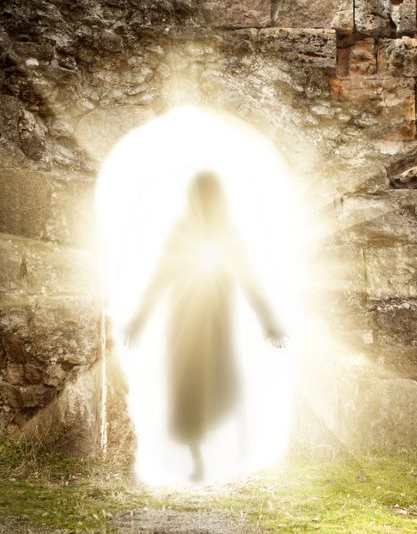
The risen Christ is our SUN! – by John Wijngaards Easter, 4 April 2021

Reviews of TEN COMMANDMENTS FOR CHURCH REFORM November 2021

My inner struggle – by Tina van Lieshout 27 March 2021

I accuse men – by Tina van Lieshout 20 March 2021

I accuse women – by Tina van Lieshout 13 March 2021

Review of WHAT THEY DON’T TEACH YOU in Renew, March 2021 – by Michael Kerrigan, 12 March 2021

The force of time – by Tina van Lieshout 6 March 2021

Women carry the Church – by Tina van Lieshout 27 February 2021

Review of WHAT THEY DON’T TEACH YOU in UK Network March 2021 – by Jackie Clackson, 26 February 2021

Evolving identity – by Tina van Lieshout 20 February 2021

The money dragon and the dragon of religion – by Tina van Lieshout 13 February 2021

Irrepressible thrust in me – by Tina van Lieshout 6 February 2021

My Choice – by Tina van Lieshout 30 January 2021

Male and Female – by Tina van Lieshout 23 January 2021

Me Broken in Pieces – by Tina van Lieshout 16 January 2021

Three Selves in Me – by Tina van Lieshout 9 January 2021

Excerpts

Desert Journey – by Tina van Lieshout 2 January 2021

SEVEN STRATEGIES TO PROMOTE WOMEN’S ORDINATION – by John Wijngaards 15 December 2020

Jesus Christ wants women in the priesthood. Proclaim it – by John Wijngaards 11 December 2020

Support integrity in the Church and voices of protest – by John Wijngaards 4 December 2020

Make women more visible in the Church – by John Wijngaards 27 November 2020

Create opportunities to educate people for change – by John Wijngaards 20 November 2020

Be familiar with the theological reasons for ordaining women – by John Wijngaards 13 November 2020

Understand the arguments Rome gives for its ban on women priests and know how to refute them – by John Wijngaards 7 November 2020

Recognise that the SOURCE for women’s openness to ordination lies not in emancipation but in baptism – by John Wijngaards 30 October 2020

Pope Francis on Women’s Leadership – by John Wijngaards 10 October 2020

The Catholic Church in the Netherlands – by Prof Jozef Wissink 22 September 2020

Does Christ want women to be priests? 1 September 2020

Crisis and Challenge in the Roman Catholic Church 30 August 2020

Anything you ask for? 21 May 2020

Prayer of Petition 16 May 2020

Did God send Covid-19 – or should we even ask the Question? 10 May 2020

Theologians reject Pope’s vision of women’s role and demand unbiased committee examine evidence of Women Deacons 12 February 2020

Re-writing the Gospels: Cardinal Ladaria’s Argument against Ordaining Women 11 June 2018

Réécrire les évangiles: l’argument du Cardinal Ladaria contre l’ordination des Femmes 11 June 2018

When the Magisterium Ignores Theology 17 November 2016

The Prohibition Against Ordaining Women: On Not Inventing Doctrine 16 November 2016

Contraception and Gender Equality in the Catholic Church 15 November 2016

A Narrow, Small Church: A Case for Discernment for LGBTQ+ and Progressive Catholics

A Narrow, Small Church

A Case for Discernment for LGBTQ+ and Progressive Catholics

by Benjamin Brenkert, Ed.D., L.M.S.W., 22 June 2021

While some LGBTQ+ friendly pundits and priest-authors write deliberately about building bridges, or working from within the Roman Catholic Church to generate change, the victories are few, the lessons learned from a lack of action on doctrine clear. In America, and quite possibly the Roman Catholic World a narrow, small church is not burgeoning inclusivity, it is excluding members without pause. While Pride month is a cause celeb for the victories of the LGBTQ+ community in the secular world, it is also a time to reflect on the lack of progress made in a church that counts 1.2 billion members worldwide.

The lack of progress, along with the aging of Pope Francis I is ushering in a period of trepidation for LGBTQ+ and Progressive Catholics, those unlike me that felt “Tornado Francis” would shake up the Church from top down. When Pope Francis I was elected I was a Jesuit Seminarian, and cautioned exuberance, reminding peers and loved ones to be discerning, prudent, cautious and to always pray that the Pope’s words translated into doctrine. It hasn’t happened (yet).

I reflect on four recent events that have religion reporters typing at a harrowing pace, filling secular and religious papers with opinions and questions about the future of the Catholic Church. First, Pope Francis punted gay marriage to the secular world, whereas the Church whose own theologians created and defend the doctrine of transubstantiation argued that the Church cannot pursue religious and theological arguments for same-sex marriage.

Second, is the stunt pulled by some gay-friendly German priests and their lay staff to bless some same-sex couples in liberal-leaning parishes. Some is an important pronoun here, as much as Germany is an important location, why: because not all same-sex couples in Germany received the blessing, and it is a known fact that Germany’s catholic population is dwindling quickly, along with the rest of secular Europe.

Third, Catholic Social Services, a nonprofit organization that receives government funding through contracts with the city of Philadelphia won their case before the United States Supreme Court. In the unanimous ruling, Catholic Social Services is allowed to refuse the adoption of a child or children by LGBTQ+ married couples based on an argument for religious liberty. Of course, one might ask why an LGBTQ+ couple would hope that a Roman Catholic social service agency would allow them to adopt a child or children in the first place. But of course, the more important argument is, why would the city of Philadelphia, other municipalities, even the Federal Government continue to contract with Roman Catholic Agencies and provide them with tax-payer dollars when they discriminate against LGBTQ+ people?

Finally, we have the historic vote from the United States Conference of Catholic Bishops where the most conservative prelates are prepared to deny the Eucharist, also referred to more commonly as communion, to liberal leaning politicians like President Joseph R. Biden.  In 1905 Pope Pius X, who is remembered as “the Pope of Holy Communion”, emphasized the practice of frequent communion in a decree titled, Sacrosancta tridentia synodus. In it Pope Pius X declared, “plainly enough that the wish of Christ is that all Christians should be daily nourished in the heavenly banquet.” The theologian Marcus Borg wrote in his text (1987) Jesus, A New Vision: Spirit Culture and the Life of Discipleship that, “the simple act of sharing a meal had exceptional religious and social significance in the social world of Jesus. It became a vehicle of cultural protest, challenging the ethos and politics of holiness, even as it also painted a different picture of what Israel was to be, an inclusive community reflecting the compassion of God.” Not so in 2021, when and where sharing a meal, the body of Jesus Christ itself is weaponized for control of a narrowing, small church, with diminishing influence on the secular world, if not its own members globally.

To be clear, unfortunately, there is nothing controversial in the Bishops reining in their flock, especially since they are using doctrine and dogma to explicate officially accepted religious teaching, e.g., there is no misdirection. For those curious, doctrine is teaching proposed by the Roman Catholic Church, and dogma is divinely revealed truth/the infallible teaching authority of the Roman Catholic Church.  What is unfortunate, is that in doing so the Roman Catholic Bishops are misleading the faithful, leading them to believe that to be saved (eternally) requires adoption of this system of faith, with its structural sin and systemic evil: anti-gay theology, denying communion, not developing or changing doctrine or dogma, letting urban, liberal parishes and schools run by religious orders to follow a subset of their rules and therefore, palliate concerns about the lack of progress in the Roman Catholic Church.

Fortunately, there is another way for LGBTQ+ and Progressive Catholics, it is based on discernment, something I learned as a Jesuit Seminarian and with gratitude to Saint Ignatius of Loyola, the founder of the Society of Jesus. Discernment is a process through which a change is made in one’s life, e.g., through acquisition of new knowledge and understanding about the direction of one’s life. In this case, the goal is the greater service of God, human flourishing as a member of full value in one’s religious community. There are many ways to complete a discernment, discernment is best completed with a spiritual director or companion. It is not easy, but with a good spiritual companion, the journey over time leads to freedom, e.g., to elect something new, and ends in peace.

To end, journalists and guest opinion writers concerned about the direction of the Roman Catholic Church are missing an opportunity to direct readers towards discernment because they understand this development as news, therefore fact, or naively want the very Church they are covering to welcome all to the communion table.  The Catholic Church is not a democracy, though Pope Francis may be considered a Prince, Mother Church is led through time on written laws codified in doctrine and dogma. If those laws do not give life, impinge upon your flourishing and leave you imbalanced spiritually as you chart your course through our secular age, remember there is another way: to use discernment as a means to go, to find salvation and a religious community, if they are important to you in a system of faith that envisage what Aonio Paleario, an Italian reformer of the Church, once wrote in 1542, “Would God it could please all to become one in that one Christ, whose name we all do carry.”


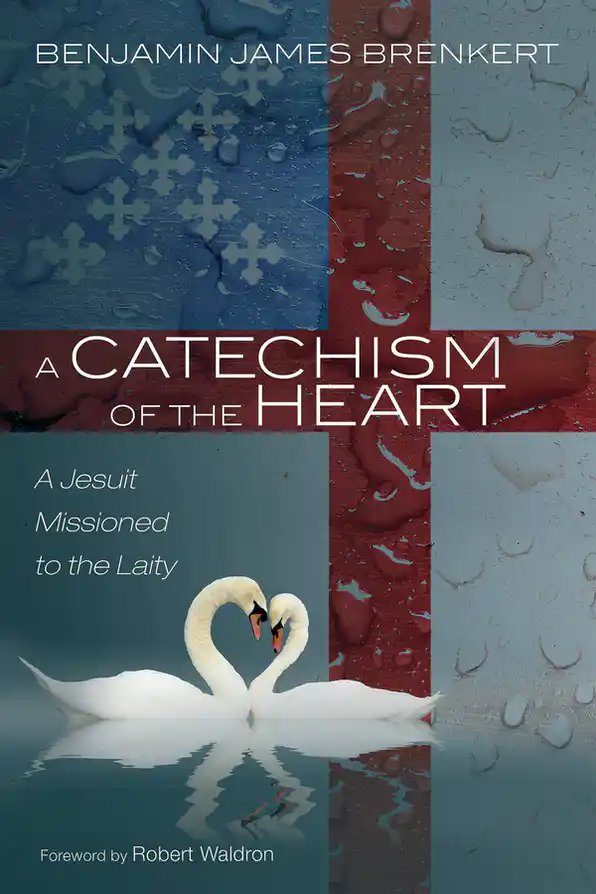
Benjamin Brenkert has written an interesting book entitled A Catechism of the Heart: A Jesuit Missioned to the Laity.

The book is available on Amazon in soft cover, hard cover and Kindle editions.


Catechism of the heart

Benjamin James Brenkert, A CATECHISM OF THE HEART. A Jesuit Missioned to the Laity, Wipf and Stock, Eugene OR 2020.

This is a captivating book, candid, upsetting, thought-provoking, profoundly personal and yet revealing an evil that scars many people’s lives.

Brenkert grew up in a troubled working class New York home. He narrates in detail how he as a teenager and adult discovered his gay sexuality. He describes his many sexual adventures in high school, in a Marist College, in the Jesuit noviciate. I would not be surprised if some readers dismiss the author’s account as the sad story of a man who has lost his way. But that would be a serious misjudgement.

The value of this book lies in its being an honest testimony. I consider the honesty that shines through as the book highest quality. Yes, Brenkert is not a saint, nor does he claim to be. But he describes vividly the struggles, the agony, the utter desperation of a Catholic who feels rejected by the Church as a misfit.  Church authorities should carefully take note of his anguish, for Brenkert is a spokesperson for many sincere Catholics throughout the world.

For while wrestling with his sexual nature, Brenkert was and is also a deeply spiritual man. I am impressed by what he says about his reaching out to God, and in particular Jesus Christ, in prayer. There is no doubt about his feeling called to the priesthood for all the right reasons. Thus it was all the more painful for him to be condemned for his homosexuality both by his family and by many in the Church. And here we meet the core of what his book is really about.

“I was a mess, plagued by so many conflicting feelings about myself. On the one hand I accepted my being gay but on the other an inner voice chastised me for it, saying maybe the church is right in condemning homosexuality. But then another voice would fight back: God made me this way and He loves me for who I am. This back and forth of alternating voices was going on all the time.”

Brenkert’s merit is that, in spite of all opposition, he discovered and affirmed the principle that gays and lesbians should be fully accepted for what they are.

“If my church doesn’t accept me as a gay person, as a member in full communion (good standing) with the Church, she then is denying, if not destroying, my identity. Some would argue: why do you care if you’re accepted or not? I care because I am a Catholic; my family is Catholic; and many of my friends are Catholic. Catholicism is in my bones, my DNA. And if the church in her ignorance rejects me, then I will do all I can to convince her to accept me and every other gay person in the world.”

As a Jesuit in temporary vows and as a theologian studying for the priesthood Brenkert was repeatedly advised by his superiors to hide his homosexuality. It would harm his career, they said. He met a number of priests and religious who were gay but refused to admit this openly. Brenkert rightly sees this as an error and a great injustice. If God has made them gay, why should these authorities not publicly acknowledge they are gay? If they did, they would encourage other gay persons to embrace their sexuality and not feel it as a guilty secret they need to repress.

My final observation about this book is this: Brenkert is obviously very intelligent. He must have considered the reasons for which the official Church denounces homosexual acts: their presumingly going against the law of nature imposed by the Creator and biblical texts that seem to forbid them. The Wijngaards Institute has recently conducted in-depth international research that proves these reasons to be wrong, see https://www.wijngaardsinstitute.com/academic-statement-ethics-same-sex-relationships/ But Brenkert does not mention those reasons or expand on them. And he is right. The thrust of his book is different. It is a testimony of the heart, of his deep Catholic sense of faith, the instinctive insight about what is right and what is wrong emerging from every believer’s conscience and power of reason.

The book can be obtained from Amazon or directly from the publisher: www.wipfandstock.com .

John Wijngaards

The risen Christ is our SUN

The risen Christ is our SUN

by John Wijngaards, Easter Sunday, 4th of April 2021

At Easter we glibly speak of resurrection without getting any closer to what Gnostics called ‘understanding’ it.

What does resurrection mean in practical terms? How does our Easter faith distinguish Christians from non-Christians? And if we who believe in Christ “have already passed from death to life” (John 5,24), that is: if resurrection starts now, what does it consist in and how can we know it? Paul said he knew the power of Christ’s resurrection (Phil 2,8-10). Then surely we should be able to know it too.

For our search, Gnostic writings may prove a help. Though Gnosticism strayed from Christianity into various heretical sects in the course of the centuries, it probably had one of its roots in the Johannine tradition and may have preserved some valuable Christian insights partly lost in other strands.

A Gnostic letter of around 200 AD states that resurrection is real for us Christians, because we ‘possess’ resurrection. “Resurrection of the spirit”, it says, “swallows resurrection of the psyche and resurrection of the flesh”. It then describes resurrection of the spirit as “being drawn upward by God as rays are drawn by the sun”.

Gnostic thinking

Gnostics commonly distinguished between three types of Christian: earthly, psychic and spiritual; corresponding to the Greek distinction in human beings of the material body, the psyche (animal soul) and the pneuma (spiritual soul). The three types expressed distinct pastoral categories which, interestingly enough, still have some relevance today.

  • Material Christians are, for Gnostics, those Christians who have either never had, or have lost, any real spiritual dimension. The whole of religion is translated into material terms. Prayer means asking God for money or health. Weddings and funerals arc reduced to mere social functions.
  • Psychic Christians, on the other hand, take the practice of their religion seriously. They believe revealed truth, receive the sacraments, honour Christian ethics. They fall short, according to Gnostics, in their level of awareness and of participation. Psychic Christians objectivise the truths of faith, making God speak and act as if God were human. They look on ritual and sacrament as quasi-magical sources of grace. Psychics believe the commandments were formulated by God himself/herself as the detailed guidelines of an anxious parent. In all this, Gnostics contend, psychics miss the characteristically spiritual dimension brought about by resurrection.
  • Spiritual Christians, who have experienced “the resurrection of the spirit”, also accept the doctrines of faith, the sacramental dispensation and Christian moral principles. But having discovered that God is genuinely Spirit and is Spirit in themselves, they approach these realities as mysteries. God, they know, is infinitely beyond human categories and so we can only speak of God through image and metaphor. The sacraments heal and foster, as dynamic signs. Laws and regulations do not express God’s immutable decrees. They are human approximations distinct from Love which is God itself. Spiritual Christians are the true “Gnostics” (knowers) because they know God and spiritual realities directly.

Christ is our SUN

Remember: Gnostics describe resurrection of the spirit as “being drawn upward by God as rays are drawn by the sun”. What does this mean? All of us carry within us rays of light. Through resurrection we consciously relate these rays to their origin, to God, who is like the sun. God holds us fast, as the sun holds its rays, until our sunset, that is our physical death. Then God draws us back to himself/herself as the sun pulls back its rays. Through resurrection we discover we are light and start living in the day.

Now Gnostics were a varied and funny lot. Some were spiritual snobs. Some mixed their Christian beliefs with incompatible pagan philosophies. Some seem to have advocated bizarre forms of behaviour. They hardly were the kind of people to be universally trusted as spiritual guides. Yet they may have preserved valuable insights.

What does the Gnostic view of resurrection mean in practical terms? I am risen with Christ if I have become aware, in a tangible way, that God, who is above everything relates to me directly. This consciousness of resurrection shows itself clearly in that beautiful truly Christian knowledge that God is love. If I have this consciousness, I feel secure in his love. I know that whatever may happen to me and whatever my human weakness, God is there to forgive me and love me and pull me through. The realisation of God’s direct and personal love overcomes any fear I may have, even the fear of death.

I am still not fully risen with Christ, I am still a ‘psychic’ Christian, if I allow anything at all to take the place of my trust in God’s love. If my spirituality hardly rises above observance, it may well be that conformity has dethroned love in me. If I constantly feel scruples about external transgressions, my God may be fear. If I never meet God in a silent person-to-person encounter, I am missing out on my deepest potential in relationships. In all such cases the cure will probably require more than a gradual recovery. It calls for a true liberation, for an opening of my eyes to the reality of God’s love, for a resurrection of the spirit in me.

John Wijngaards

[abbreviated from an article I published in THE LONDON TIMES, Monday April 1 1991]

Review of Wijngaards’ book in RENEW

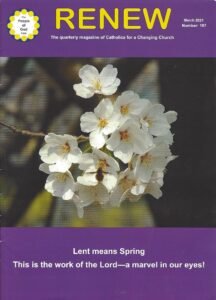
Review by Michael Kerrigan in RENEW, the quarterly magazine of Catholics for a Changing Church, no 197, March 2021, p. 16.

John Wijngaards, What They Don’t Teach You in Catholic College: Women in the priesthood and the mind of Christ, (Lafayette, Acadian House Publishing, 2020), hb, 216 pp, ISBN: 978-0999588444, £16.99. Also available as Amazon Kindle ebook, £7.99.

This short book with a very long title is most timely. The subject-the ordination of women-may still be taboo in ‘Catholic college’, but it is now widely and openly discussed among Catholics, with several recent books bringing substantial theological and historical support to the debate in favour of change. This author, however, began arguing the case for women ministerial priests nearly fifty years ago and has maintained his position consistently through the long years when the subject was explicitly declared ‘off-limits’. The book is an account of his campaign (which cost him his ministerial priesthood) as well as a cogent presentation of the case.

The essential reason the institutional Church gives for rejecting women’s ordination, according to Wijngaards, is that Jesus wanted it so. On the contrary, he argues, not only is that argument unfounded in Scripture, there is ample evidence that Christ-the risen Jesus-wants women to be able to serve as ministerial priests in our time. The constant ‘tradition’ of exclusion reflects ‘human preferences and customs’, not the mind of Christ.

After detailing the historical facts of women’s exclusion, he shows that this boils down to ‘cultural prejudice’-the innate inferiority of women—or dubious theology-woman not being created fully in the image of God, or of the male Jesus. The mediaeval Church, including Aquinas, combined both. Dismissing such outdated notions, our author then argues that Jesus, though, as a man, subject to the knowledge and culture of his time, ‘never meant his choice of just men for the twelve apostles to establish a permanent rule’; indeed Scripture, particularly the writings of Luke, contains ‘clear pointers’ to Jesus’ openness to women’s ‘full participation in Holy Orders’. Priesthood, as Christ intended it and Hebrews describes it, is based on love and service; it does not ‘include a requirement of gender’.

Moreover, despite official opposition, the faithful have consistently believed a woman could be a ministerial priest; it is implicit in much Marian devotion. Now, in the twenty-first century, the sensusfidelium is clearly in favour. However constant and forceful traditional opposition may be in this case, the Church’s long-held position on equally major questions has changed: witness slavery, nulla salus, etc. Wijngaards concludes: ‘It is time for the Church to listen to what Jesus Christ really wants’.

Useful appendices include relevant papal documents and a ‘timeline’ of key dates.

Though brief, this book presents a very well-researched, most readable and compelling case, based on a lifetime of serious study. Well worth the 3 hours and 36 minutes which Kindle says it will take to read.

Seven strategies to promote women’s ordination

SEVEN STRATEGIES TO PROMOTE WOMEN’S ORDINATION

  1. Recognise that the SOURCE for women’s openness to ordination lies not in emancipation but in baptism.
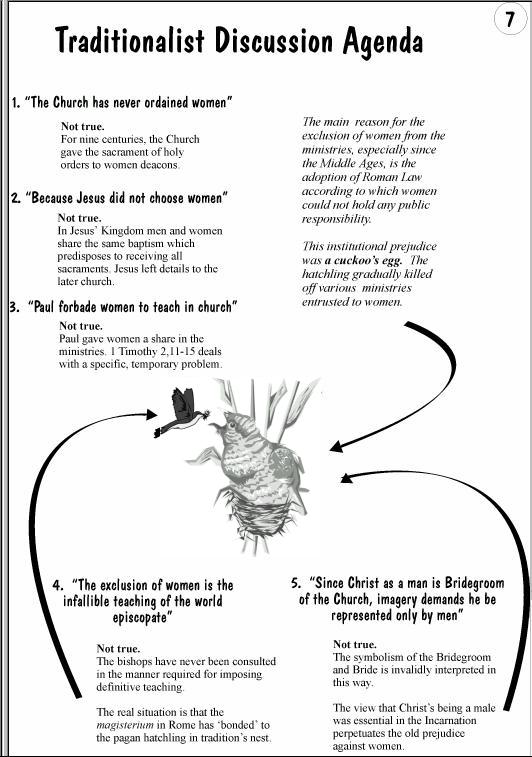
  2. Understand Rome’s arguments for its ban on women priests and know how to refute them.
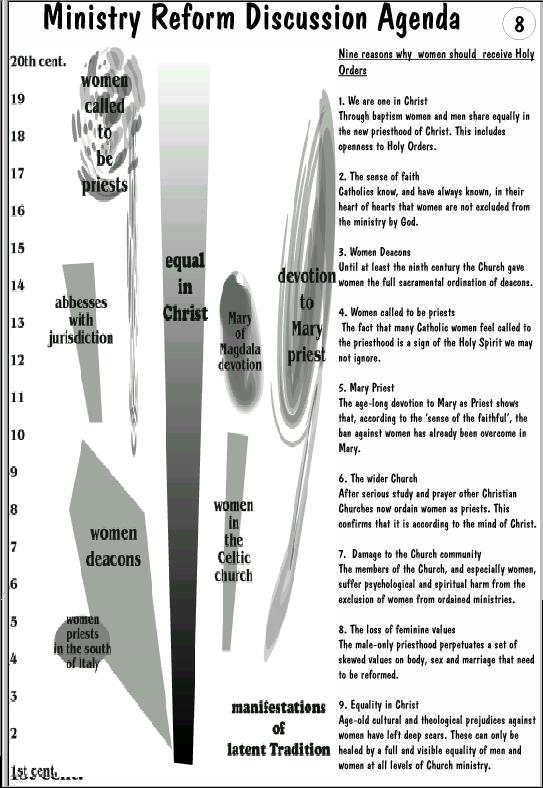
  3. Be familiar with the theological reasons for ordaining women.
  4. Create opportunities to educate people for change.
  5. Make women visible in church.
  6. Support integrity in the Church and voices of protest.
  7. Jesus Christs wants also women in the priesthood, not just men. Proclaim it!

Two related useful diagrams can be found here:

Arguments of church authorities


Arguments of modern theologians


Read also my latest book:

John Wijngaards, WHAT THEY DON’T TEACH YOU IN CATHOLIC COLLEGE. Women in the priesthood and the mind of Christ, Acadian House Publishing, Lafayette USA 2020.

Review of ‘what they don’t teach you’

WHAT THEY DON’T TEACH YOU IN CATHOLIC COLLEGE. Women in the Priesthood and the Mind of Christ

by John Wijngaards, Acadian House Lafayette, Louisiana USA 2020

review by Jackie Clackson in NETWORK. Journal for all women interested in spirituality, theology, ministry and liturgy, Spring Issue No 146, March 2021, p. 23.

John Wijngaards shows how in the Church there is still so much outmoded tradition which is clearly in need of reform. In this readable book, which I heartily recommend, he draws upon personal experience as well as theological scholarship to get to the depths of this question: Can women be ordained priests in our church of today? His resounding ‘Yes’ comes through from his efforts to explore the mind of Jesus during his life and how it is manifested in our Christian sense of faith.

The book highlights the role of cultural prejudice against the full humanity of women throughout tradition over the years; the stories showing Jesus’ regard for women, as found in scripture; the devotion for many centuries to Mary as Priest; the ordination of women to the diaconate during the first millennium; the hardening of Vatican opposition in the light of the ecumenical ordination of women. He describes the church’s disastrous error in its constant teaching on slavery. Is it not obvious, he asks, that the church hierarchy is equally wrong in forbidding the ordination of women to the priesthood?

We can be really moved by the vision of Jesus as a person of his day who has no
prejudice against any person he met. The woman at the well came at a time when
she knew no one else would be around and be scandalised by his sharing this
space with a ‘fallen woman’. But we see that on the contrary, Jesus, who just
happened to be there at the time she came to collect her share of water, had no
illusions about her way of life, and treated her in a friendly way just as he related to everyone else!

From the beginning, Christian baptism has been given in the same way to women and men, thus showing equality in the way we share Christ’s priesthood in principle. It was only later that a hierarchy in the Church grew up to demand new rules and regulations – and especially to create a disparity by insisting on difference in the kind of calling and service women and men may take up in the Church.

This book will help people understand the background to many of the underlying prejudices and misinformation which the hierarchical system in the Church has been teaching us all for so long! Nowadays we clearly recognise, as is pointed out in Chapter 2, that ‘having women in the priesthood would greatly increase the positive
impact that the Universal Church has on the world.’

In short: easy to digest and powerful in content, like a plate of pink salmon served with Brussels sprouts! The book has enjoyed good reviews in Ireland, the USA, Spain and the Netherlands with more expected to follow.

Jackie Clackson

The Review RCWP

The Review  RCWP-Canada

book review by Susan K. Roll,   15 February 2021

John Wijngaards, What They Didn’t Teach You in Catholic College.  Women in the priesthood and the mind of Christ.  Lafayette, LS, USA:  Acadian House, 2020.  ISBN 13: 978-09995884-4-4.  ISBN 10: 0-9995884-4-3.  213 pp.  $16.95 US.

“This common priesthood is given through the Sacrament of Baptism.  We should note that this baptism is exactly the same for every single person.  There is absolutely no difference in the baptism conferred on women.  And this is revolutionary. … The ordination to the sacramental priesthood is an extension of the basic sacrificial and prophetic sharing that has already been given in baptism.”  (p. 92)

Here in the proverbial nutshell lies the core of the theological foundation for admissibility to the Sacrament of Orders: Baptism itself.  Vatican pronouncements on the ordination of women avoid engaging with this fact, relying instead on a handful of arguments purportedly drawn from interpretations of what Jesus of Nazareth might have willed for the assembly called Church that grew and expanded geographically when he was no longer with them on earth.  As a general rule, when the arguments for a particular position are not strong enough to support it, and those who advance the argument insist upon its absolute truth to the point that they attempt to quash all further discussion, there is clearly much more driving the issue than the arguments presented.  Something else is propelling their stance, perhaps something difficult to acknowledge, perhaps something embarrassing or something perceived as threatening.  Perhaps something that is just wrong.

In this essay I will address a few of the issues raised by John Wijngaards from a slightly different perspective – historical-critical methodology in the case of the arguments concerning the ordination of women, as well as new thinking on male priesthood, to try to shine light on the underlying issues.  But at the same time I would not want to discourage anyone from reading the book because they think it’s too academic in nature.  It’s not.  Wijngaards blends together not only history and scripture, but his own lived experiences with anecdotes, correspondence, personal reflections and his lifelong passion for justice, on an international and an ecumenical level.  There is nothing in this work that would intimidate general readers –in fact it would make a great study-group text.  It’s an enjoyable read.

Scriptural arguments concerning women’s leadership

Wijngaards matches the chief scripture-based arguments invoked by the Magisterium of the Roman Catholic Church as justifications for the policy against calling women to ordained ministry.  He refutes each argument on the same prima facie, at-face-value basis on which the Magisterium employed it.  I believe the arguments for opening ordination would be stronger if we take a more realistic look at the nature of the scripture texts themselves, and if we remember that the Gospel writers did not intend to report facts.  They were not journalists.  They set down selected stories and sayings of Jesus that went back several generations, so as to persuade the hearers that this Jesus of Nazareth was truly the promised Messiah of Israel.  The Gospels were shaped by their authors’ overarching goal.

A chief example is the Magisterium’s use of the idea that there were twelve and only twelve apostles, with male names, in order to argue that Jesus of Nazareth deliberately selected only males to be the official ancestors of what would become bishops and priests in the later Church.  The real significance of “The Twelve” for the early generations after Christ was to set up a rhetorical argument to claim that they mirrored (and succeeded) the twelve tribes of Israel and to establish the claim that Jesus was the Messiah.  In fact Wijngaards points out that the later reference to seventy-two apostles sent to all the corners of the earth contradicts a limited definition of “apostle.”  (We might add, so does Paul when he calls Junia an apostle.)  Did Jesus of Nazareth, the night before he was executed, actually think of appointing only twelve responsible leaders?  Did he intend to exclude the many identified women in his movement?  Can we assume that Jesus really made a conscious selection of males because he was “very much hampered by the ‘social myth’ of the world in which he lived”?  (p. 57)  We can’t know, because there are no recordings, no unbiased histories.  We can only surmise, and that is the point at which Wijngaards invokes the centuries-long influence of what he calls social myth, bias or prejudice against women.  We will return to this shortly.

In his treatment of the presence of women in the Gospel of Luke and Acts, Wijngaards does encourage a wider perspective that takes account of his focus on the early Christian communities and what they may have needed to hear to move forward, develop new ministries and take the message far afield.  Of course these are not in the words of women themselves but rather an observer’s accounts, chosen for their relevance to the first generations of believers.  Do we know why Luke made the editorial selections of stories he made and shaped them in a certain way?  Again, we can only guess, but in the Lukan texts we are provided a rich variety of accounts of women’s presence and action that works against the credibility of a proof-texting approach that would absolutize one interpretation over another to justify a much later policy.

In any case, I have to confess to a lurch when I read the section heading, “Jesus wants women in the priesthood.”  There was no priesthood in Jesus’ entourage of followers, and none in the first generations following his earthly lifetime either.  Fortunately Wijngaards makes a save, so to speak, by returning repeatedly to the role of the Spirit in guiding the Church.

Arguments from “Tradition”

“Tradition”, with a capital T, presumes the power to enforce with penalties universal conformity to the laws and policies that take their justification from it.  Wijngaards helpfully points out that throughout Church history the exclusion of women from the priesthood is rarely put down to Jesus, but instead justified by arguments from natural law that purported to demonstrate women’s natural inferiority to men.  He also supports this part of the argument by noting that the early episkopoi, the overseers/bishops, were drawn from many communities and were not solely Jews who succeeded the apostles/twelve tribes of Israel, thus pointing to a lacuna in the line of tradition.  But a deeper question about Tradition needs to be posed.

In the words of feminist liturgist Marjorie Procter-Smith, is it our tradition?  To expand a bit, is this a tradition shaped, or co-shaped, by women theologians and promulgated by women who hold authority?   If the question sounds ridiculous, then there’s a good answer to the credibility of “Tradition” for the whole Church, both now and over the course of time.

What propels the question?

The initial context in which Wijngaards sets his advocacy for the ordination of women — the advancement of women’s prominence and women’s rights in politics, society and secular culture — is also known to those who frame contemporary official Church doctrine.  Even Pope John XXIII admitted in 1963 that women in his day were no longer willing to accept second-class status.  So why does this argument not move the question in the Catholic Church when it played some role (along with scripture and theology) in mainline Protestant churches?  For that matter, why does the desperate need for sacramental ministry in the Roman Catholic Church worldwide not push the question of the admissibility of women and married men forward, as seen in the conclusion of the Synod on the Amazon?  Wijngaards alludes to both of these as significant contextual issues profoundly affecting the Church today.  Clearly neither of these, obvious as they are, is enough.  So what constitutes the underlying entrenched core that we’re not discussing?

I would say, the deeper core is already peeking out at us from Wijngaards’ well-summarized survey of the long trajectory of belief in the natural inferiority of women as such.  In his Chapter Three he presents a concise summary of the history in the Church of the concept of women’s inherent natural inferiority: from Aristotle and Greco-Roman society, through Aquinas and Bonaventure, through the earliest canon law, up to today.  Later in the book he illustrates modern misogyny in world cultures.  There are of course volumes that could be written full of examples.  (A logical problem: if women are truly inferior by nature, why work so exceedingly hard to keep women inferior?  Won’t it just happen on its own without the polemics?)

What underlies it all is primal contempt for women and women’s bodies.  This plays out, among other areas, in the theology of the Mass as a sacrifice.  Sacrifice, as enacted by Catholics in the Eucharist, has its roots in an exclusively male act of union with a male-configured god/God and patrilineal adoption among men — as a” remedy for having been born of woman,” in the words of Harvard sociologist of religion Nancy Jay.  What is really at play here?  A belief that “weak” women represent the evil negative identity that men must reject?  Ancient blood taboos by which women’s bodies are thought to defile the sacred altar?

Wijngaards refers often to the role played by what he terms prejudice, or the social myth, of women’s inferiority.  For me these terms are so mild that they verge on misrepresenting the evil of misogyny, not only in the Church but in the way contempt for women accompanies the newer extreme right-wing movements in society.  Calling it merely “prejudice” lets them off the hook too easily.

Twenty years ago prominent liturgical historian James F. White wrote of “the Vatican’s war on women.”  Was this hyperbole?  My seminary students certainly thought so.  I think it touches a neuralgic point, and it’s high time we named it and massaged it a bit, so to speak.

An unhelpful side argument

I was perturbed to see that Wijngaards includes as an appendix an excursus designed to demonstrate the absolute reality of stereotypical male and female characteristics on biological grounds, citing a scattering of research studies.  This is flat-out biological determinism, and it plays straight into the hands of those who would keep women confined to the home.  Wijngaards seems to have intended to point out how much the Church is losing by arbitrarily suppressing the agency and the leadership of over half of its members.

This book is a valuable resource in the work of advocacy for opening the criteria for ordination.  It contains a variety of types of texts.  Of the theology, take what makes sense to help build the discourse on ordination.  And read the personal anecdotes and stories for the pleasure of meeting a new, wise, experienced and undaunted friend in the struggle.

Seedkeepers – bookreview

The Seedkeepers, February 2021, Book review by Susan Roll

John Wijngaards, What They Didn’t Teach You in Catholic College.  Women in the priesthood and the mind of Christ.  Lafayette, LS, USA:  Acadian House, 2020.  ISBN 13: 978-09995884-4-4.  ISBN 10: 0-9995884-4-3.  213 pp.  $16.95 US.

I daresay anyone who’s part of CNWE, whether a longtime member or a relative newcomer, needs no introduction to the Vatican’s chief arguments against opening all ordained ministries to women, or why each argument is in its own way problematic.  We would also not be the slightest bit surprised to learn that there is no hard proof that Jesus ever intended to exclude women from leadership in the community gathered in his name.

Even knowing all this in your bones, you will find the latest book by theologian and life-long activist for the ordination of women, John Wijngaards, very much worth reading.  The friendly approachability of the title is enough to tell you that you’re in for an intriguing conversation, not a scholarly discourse.  The style is engaging and easy to read, the content toggling back and forth between the author’s refutations of the dominant official arguments against ordination, and interesting anecdotes from Wijngaards’ own life that shaped his awareness and activism.  You’ll meet a fascinating individual who first came to see the incongruity and injustice of the Vatican’s teaching, not at university nor in the Western church, but while he served as a missioner in India in the 1960’s.  The book includes an assortment of his lived experiences, stories, conversations and correspondence that colour his advocacy convincingly and vividly.  For this reason Wijngaards deserves a place among the pioneers on the question of the ordination of women, and a good deal of credit for his faithful lifelong commitment to advocacy in the face of opposition.

If you read nothing else in the book, push yourself to read his disconcerting overview of the false assumptions of women’s innate inferiority that have shaped Church doctrine, beginning with Aristotle, through the early church fathers, up through the Middle Ages and Thomas Aquinas, and well into the 20th century with its prohibition on women touching any sacred vessel.  This section does much to explain why narrow interpretations of scripture and tradition have been used to keep women in a secondary place, and why no appeals to women’s increasing leadership in secular society today or the Church’s obvious need for the sacramental ministry of women have budged the question.

Keeping in mind the fact that in 1976 the Pontifical Biblical Commission studied the question of whether Scripture alone could decide the question of women’s ordination one way or the other, and concluded that it cannot, take a look at the assumptions made too often that we today can decide what Jesus was thinking.  The official arguments pick out justifications for a preexisting policy.  Wijngaards’ arguments take a much broader, contextual perspective on Jesus in his own time.  In the end, as he writes, “…the Spirit of Christ is speaking to us now – loudly and clearly.”

Still though, I have two reservations about the book.  First, when a Church authority unilaterally enacts a rigid policy and then presents “reasons” why the policy must be followed without question, it’s a good guess that the real reasons lie under the surface.  The point is clearly not what Jesus of Nazareth may or may not have said, or may or may not have done.  The issue is rather the use of a skewed interpretation of the surviving written texts to justify a position arising from a much later form of church government shaped by imperial power.  Something different, something not scriptural, is driving this primordial misogyny.  Fear?  Envy?  A belief that “weak” women represent the evil negative identity that men must reject?  Ancient blood taboos by which women’s bodies are thought to defile the sacred altar?  This mystery might well prove impenetrable by theology – psychology or anthropology might give us a firmer footing.

My other concern is over the fact that Wijngaards includes in his Appendices an excursus designed to demonstrate the absolute reality of stereotypical male and female characteristics on biological grounds, citing a scattering of research studies.  This is flat-out biological determinism, and it plays straight into the hands of those who would keep women confined to the home.  Any rigid male/female split does not account for the rich variety of gender identities represented among the people of God, and the fluidity of these identities.  Wijngaards seems to have intended to point out how much the Church is losing by arbitrarily suppressing the agency and the leadership of over half of its members, and that is true enough, but not by further marginalizing other persons.

Nonetheless, I recommend that you pour a cup of tea and relax over Wijngaards’ book.  Let its common sense, scripture-shaped insight and lived wisdom strengthen your spirit and give you hope.