The Question that Will Not Go Away—Women’s Ordination, Theology and Development
Miriam Duignan, The Tablet – New Hall Festival, Saturday 11th July 2026
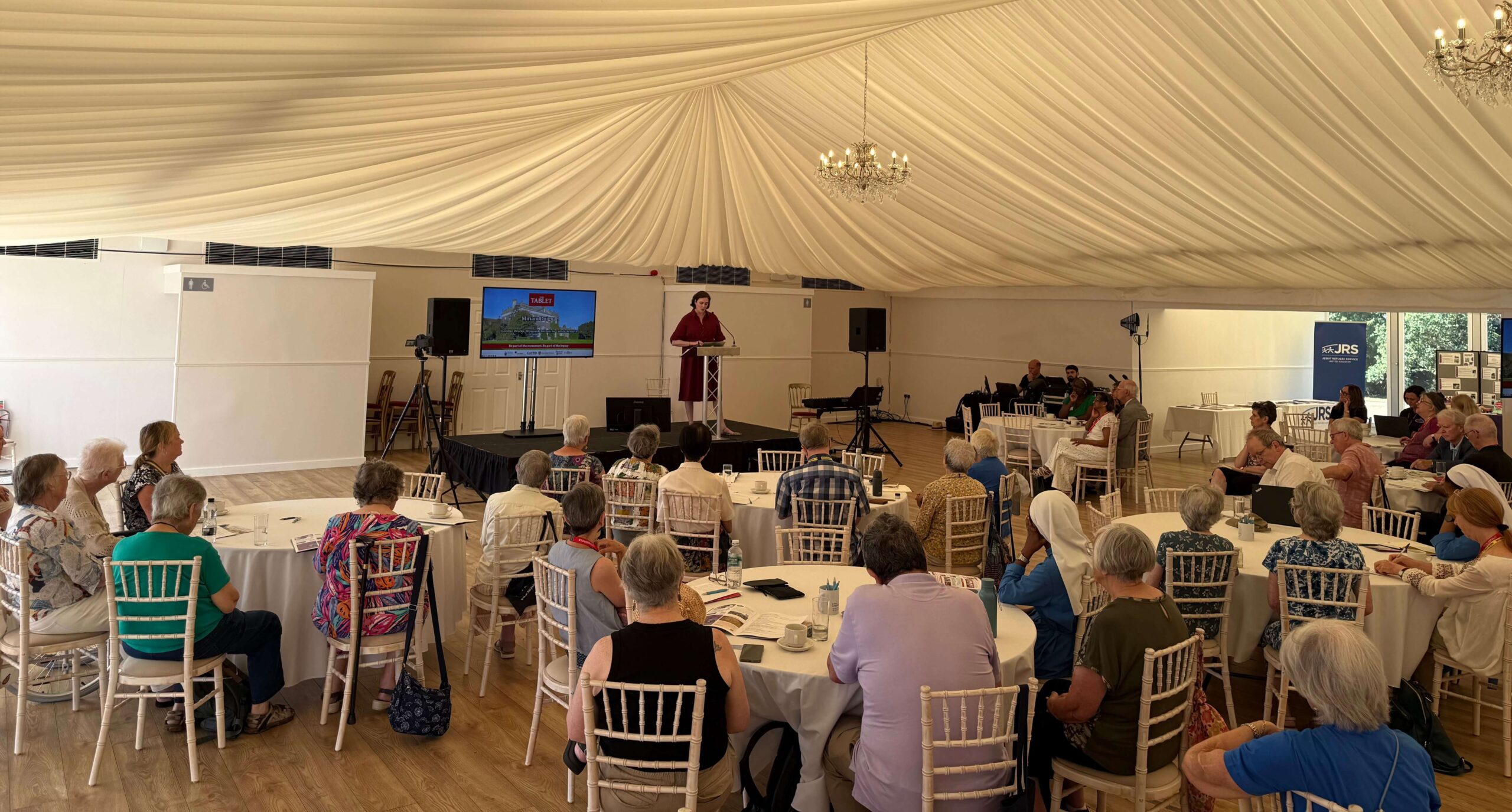
Thank you Amanda and to The Tablet for organising this fantastic festival and for the opportunity to speak to you today. Thanks to the New Hall School for hosting us in these wonderful surroundings. And a special thank you to Root & Branch who helped to get me here today.
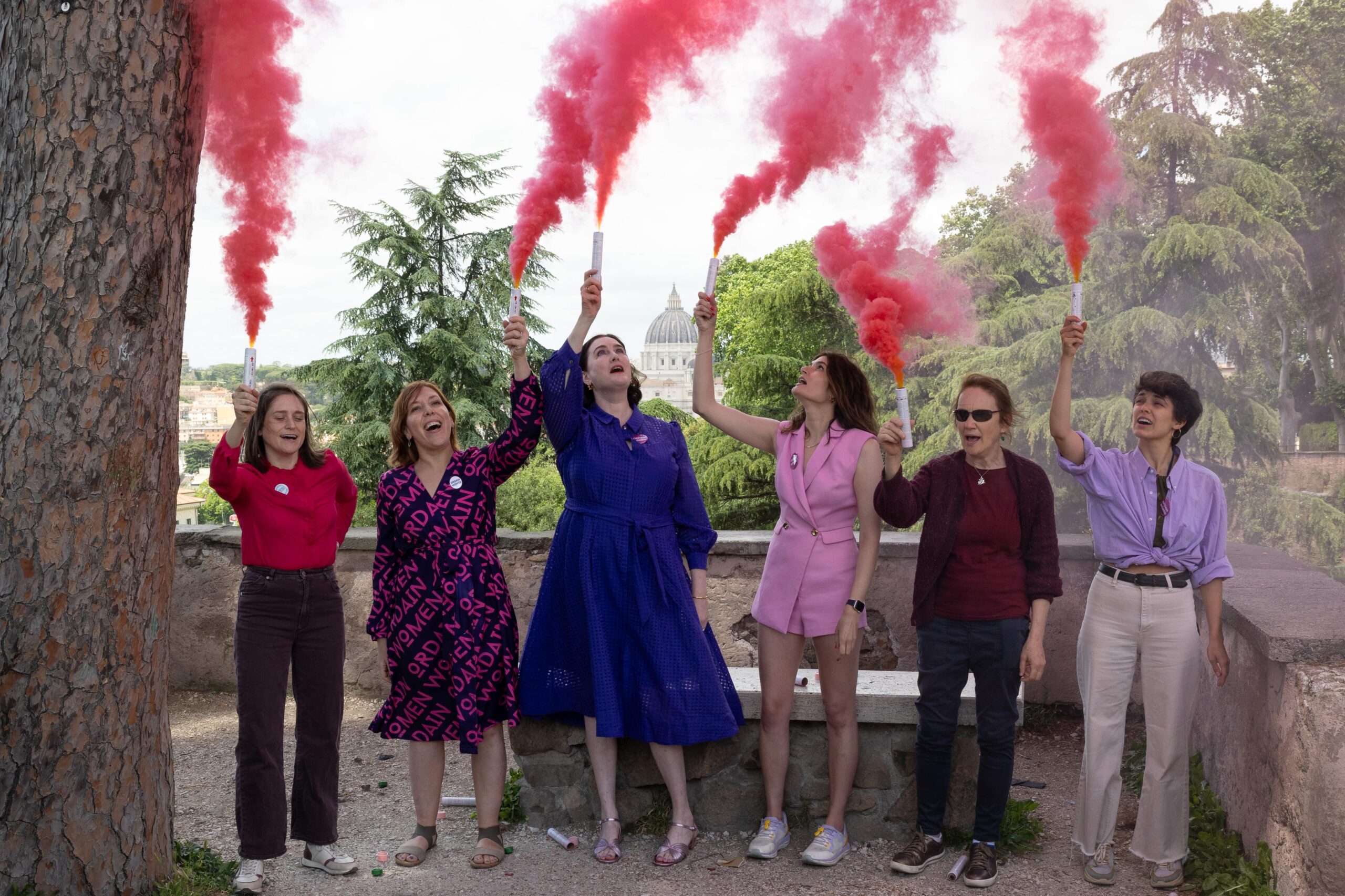
My name is Miriam Duignan, I am the Executive Director of the Wijngaards Institute for Catholic Research. When not at my day job, I can also be found in Rome campaigning on behalf of Women’s Ordination Worldwide. This often means spending time in police stations around St. Peter’s Square. If you saw pink smoke over the Vatican at last year’s conclave, you may have spotted me there. And yes, we were detained by the police after this event too for the crime of “upsetting the cardinals before they went into their conclave”. Such an offense isn’t actually written into Italian law but nonetheless, the Roman police were instructed by the Vatican to find and detain us for having staged an event that made global news asking questions about women’s ordination that they did not want raised.
But back to my day job. The Institute is named after our founder Dr John Wijngaards who was a Dutch priest, theologian, and the former Vicar General of Mill Hill Missionaries. He resigned from the priesthood in 1998 in protest of the ban on women’s ordination and set up the Institute to help Catholics everywhere to understand the truth of our tradition and our theology. We compile educational resources on issues where official Church teachings have not kept pace with contemporary knowledge and lived experience. This includes studies on same sex relationships, contraception, governance in the church and of course our largest body of work on women in ministry.
We have copies of John’s 36th and final book with us today and we’re giving a small number of copies away for free. So please pick one up at our exhibition stand. The book is titled WHY CHRIST REJECTS ALL CHURCH PREJUDICE AGAINST WOMEN and includes contributions from eight women from around the world who write about the consequences of the ban on ordination that they see in their communities.
I am here with you this morning to talk about: “The question that will not go away—women’s ordination, theology and development”. And the four main themes from this event that I will explore in relation to this question are the following:
- Catholic Social Teaching—Acting for Justice, peace, solidarity and human dignity
- The Church’s credibility and mission
- Faith in Action & rediscovering a living faith—and of course:
- Leadership and the future of ministry and the church
The reason the question of women’s ordination will not go away is because the reasons we are given to exclude women priests do not make sense, they do not stand up to scrutiny and they are not based on truth and justice. I actually take it as a very hopeful sign of health that Catholics everywhere are increasingly questioning this injustice and so many of you in this room today.
Let’s start with the basics—what do we mean when we say women’s ordination?
I am referring to what is known as the 7th sacrament—that of Holy Orders. The only sacrament that every Catholic woman is banned from receiving. Ordination is the anointing by a Bishop to initiate a vocation of service as a minister of the church. There is only one sacrament of holy orders but it has three degrees—you start as a deacon and then comes priesthood. Some also progress to be bishops. So, when I say women’s ordination, you can picture a deacon, a priest or even a bishop—the full role call.
We heard a lot about Catholic Social Teaching yesterday and we are here in the New Hall School whose focus is on activism and encouraging their students to stand up for what they believe in—especially those values of our Catholic faith.
It may not have happened to the young people here yet, but at some point, someone will question your catholic faith because of the injustice that the wider world sees in its treatment of women. You will find yourself—as I often do—trying to justify why you stay in this church. And the answer is because we believe that the good in our faith and the mission we seek to fulfil, compels us to stay and to hope, pray and to act to bring about necessary change.
I have to question how we can really be known as a church of justice, peace, dignity and solidarity when the official teaching about women and their place in the church—and society—is so blatantly based on prejudice and so contradicts our core values and beliefs?
And I ask myself, how can we claim to have a living faith when our exclusion of women from ministry is based on the very tainted and toxic teachings of a small group of medieval men. When studying the medieval theologians whose writings were used to justify the ban on women priests, what is striking is that only seven out of 29 mentioned Jesus in their pronouncements on why women must be banished from the altar. The rest were unanimous in believing women to be unfit for priesthood because of what most referred to as their “defective, inferior nature”.
We may not hear these words uttered out loud anymore but the church law banning women from ministry that came into effect ONLY in the 11th century is still in place. And for as long as we uphold that ban, the Church is effectively still condoning the terrible theology that underpins it.
In 2015, I spent a sabbatical semester at the Jesuit School of Theology in Berkeley alongside 90 seminarians, mostly young men training for the priesthood. I took the same fundamental courses in catholic ethics and social teaching as our future priests. Although I was inspired and filled with fervour from the immersion in the best of catholic teaching, I started questioning the contradictions I witnessed first-hand. Coming to the unfortunate conclusion that as a Church we simply do not practise what we preach.
In our liberation theology class, we were sent out into the world—I did an evening shift in the Jesuit funded food van that served the homeless of Berkeley. Our professor drummed it into me that when faced with difficult situations and challenging personalities, we are called as Catholics to see the face of Jesus in everyone we encounter. It is a powerful image and a lovely way to look at our fellow humans who are suffering. But then it struck me—why is it that this call to see Jesus in everyone we meet cannot extend to women being able to represent Jesus as priests?
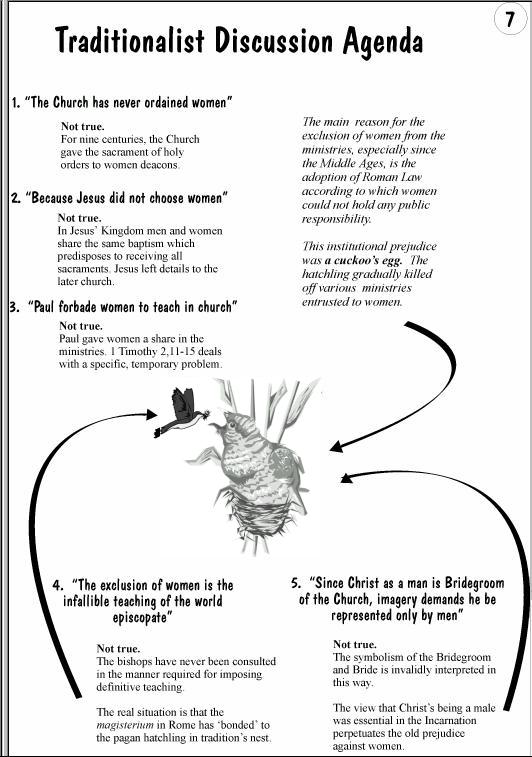
Now is a good time to list out the top 4 greatest hits in terms of modern-day excuses we most frequently hear against women’s ordination—are you ready?
First and foremost, in our modern-day repertoire of reasons given to justify an all-male priesthood is that a woman cannot act “in persona Christi” because the priest must physically resemble the maleness of Jesus. According to the teaching authority of the Vatican:
“The priest acts in the person of Christ during the Eucharist; Because Christ is male, the Church maintains that the sacramental sign requires a male to represent the Bridegroom”.
The Congregation, therefore, is the bride in this equation. Meaning that during the sacrament of eucharist when the priest is symbolically marrying the congregation including all the men, women and children in it.
I have mentioned this theory to priest friends who shudder at the weirdness of the imagery and are insulted at the suggestion that their vocation is rooted in their anatomy and that the mass requires them to assume a bridegroom role they never signed up for.
This so-called “nuptial mystery” (and yes it really is quite the mystery) was brought to the fore ONLY in 1986 as part of Pope John Paul II’s efforts to devise creative theological ideas to stop women claiming a vocation to priesthood.
This reductionist approach to ordination, not only sullies the sacrament of holy orders, it also sullies baptism. This key sacrament in Catholicism is where we are all anointed with the same oil and initiated into the community of believers as equals.
If you’ve attended a Christening or Confirmation recently, you likely heard a reading from St Paul’s letter to the Galatians that says “There is neither Jew nor Greek, neither slave nor free, neither male nor female: for you are all one in Christ Jesus” (Gal. 3:28).
This key teaching emphasizes that all divisions of race, social class, and gender vanish, as every believer is united as one in Christ. By reading it, the church publicly pledges to welcome the child and develop that child without prejudice or earthly distinctions.
But surely this runs contrary to the claim that a priest must resemble the physical maleness of Christ, as if this was his most defining characteristic and as if the validity of the mass was somehow tied to his maleness.
Now, on to excuse number 2: we are told that the church has no authority to change a constant tradition that dates back to the founding of the church.
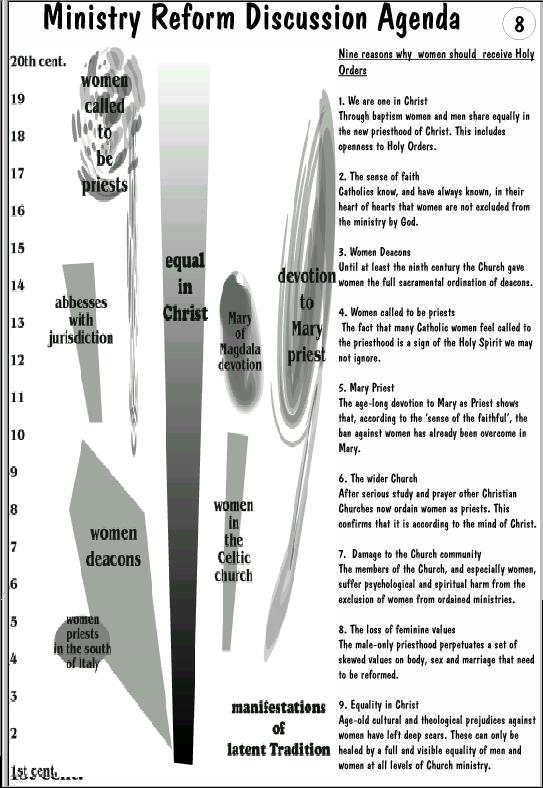
The big problem here is that the Vatican cannot prove a constant practice of a male only priesthood. On the contrary, from the beginnings of the church, women were authorized to lead faith communities and yes they definitely did administer the sacraments.
Some women are documented as acting in what is now considered a priestly role as late as the 14th century. You can read all about it in our online academic library containing all relevant evidence (I should warn you we have 2,000 documents on this question), www.womenpriests.org.
Recently Pope Leo said that women cannot be priests because Jesus only chose men as his Apostles (I expected more of him honestly). This assertion feeds into the popular myth that the priesthood somehow started at the last supper with Jesus choosing only 12 men to represent him. We know that women were named and revered as Jesus’s apostles too—and the definition of the title, apostle, is simply: “a messenger who is sent forth”.
The prime example of course is that Jesus appeared first to Mary Magdalene and she is officially recognised by the church as the “Apostle to the Apostles”.
We also know that Jesus did not ordain anyone as a priest, let alone create a male-only leadership rule. When Jesus said, “do this in memory of me,” he was speaking to both men and women gathered at his last supper.
The fact is that the equality of men and women is the true tradition of the Catholic Church—and would have remained a constant practice had the Roman Empire not taken it over and expelled female leaders. Instead of dismantling the structures of an empire, the hierarchy of our Church replicated them and then enshrined them into doctrine—structures that they continue to refuse to correct. The Canon Law that bans women from the altar came into place over 1000 years after the death of Jesus—there is no constant tradition of a male-only priesthood by anyone’s definition.
Let’s return now to the present to expose excuse Number 3 for why women cannot be ordained. This is a big one for Pope Leo. That is, the claim that reinstating women as ministers is a risk to the unity of the church, and may cause schism.
Firstly—when was our church ever unified? From the popes in Avignon to just this week with the excommunication of the Society of Saint Pius X (SSPX), the notion of unity seems more of a myth than reality.
And secondly—we need to bear in mind that every institution and profession that has sought to keep women out and maintain an all-male rule has claimed that allowing women entry would cause upset and that it would cause an exodus of men. A prime example of this is the Anglican Church. Do you know how many times I have been told that allowing women to be priests in the Anglican faith has not “fixed their problems” and therefore we shouldn’t bother?
The reality is that all churches and all communities are messy—wasn’t its Pope Francis who told us to make a mess? The Anglican church—likes all churches—had problems before they welcomed women back into priestly roles. Women should not be scapegoated for whatever challenges and crises Anglicanism has faced over the decades.
The truth is, that excluding women and going against our own tradition and ethical teaching is too high a price to pay for a very selective unity. So many Catholics have left the Church because they cannot tolerate the sexism it stands for—yet when right wing groups who want to maintain a system of male supremacy threaten to leave in protest, it is women who are expected to bear this cost and be silent in the service of not upsetting some minority factions.
And finally—our 4th of the greatest hits of excuses, is the claim that women should not be ordained because it will “clericalize” them. This suggests that women will assume the worst traits of a small minority of clerics who are preoccupied with status, titles, privilege and power.
But if clericalism has become such a risk to all potential priests, why does the church still ordain men? We still pray for vocations for men and new applicants are warmly received believing that their vocation to service is real and hoping—maybe assuming—they will end up being good priests. So why is it that when a woman expresses the same calling, she will be accused of seeking clerical privilege and power.
Tied into claims of clericalism is an equally false claim that only Western campaigners are clamouring for women priests and that these demands are off putting to women in the “global south.” The idea that non-Western Catholics do not want equality was completely disproven by the Synod. In parish feedback documents submitted to the Vatican’s synodal office, almost all of them mentioned the status of women as the number one concern. Because parishioners—male and female alike—see women doing the work to keep churches running and object to the fact that, should they express a vocation to full time official ministry, these women would be rejected solely on the basis of their sex.
This current chorus of objections to ordination of women fail to respect core tenets of our faith.
For example—we believe that priesthood is a vocation:
There are thousands of women around the world who know that their true vocation in life is to be a priest and their spiritual calling and talent for priesthood is real. Solidarity means that women’s sense of vocation must be taken seriously. They must be considered on an equal basis to men based on equal human dignity and equal baptismal dignity.
The Church accepts and encourages the vocation to religious life—there are over 600,000 religious sisters in the world today. Why is it that this vocation is respected but the call to ordination is not?
If it were true that God does not call women to priestly ministry, why not test that by letting the system that helps men discern also help women discern?
And when it becomes clear that many women are as called, as devoted, as capable as the men, why would we bar them? Justice also demands that Catholics have access to women ministers as well as men. The people of God deserve the best pastoral care in their moments of joy, crisis and suffering, and those kinds of gifts exist beyond biological sex.
Ultimately, for as long as there is a need for priests, for as long as priesthood is a requirement to administer the sacraments key and lead parishes—women should absolutely be among their number.
We believe in Dignity and Justice:
We heard yesterday about the moral leadership of Pope Leo in his recent encyclical on AI and the rights and dignity of workers. Catholic Social Teaching also references the solidarity of participation—that is the ethical commitment to shared responsibility and active inclusion. But how can the Catholic Church be a credible voice for the rights of workers when it is women who do the majority of the church’s labour yet are not allowed to receive an official blessing and institutional support for what constitutes priestly work?
It is women who are compensating for the current shortage of priests in parishes throughout the world. They are already ministering in parishes, hospitals and schools in every corner of the Catholic world. These are the people we all know—the hospital chaplains who sit for days praying with a dying patient and their family but have to call in a priest to administer the last rites.
These are the religious sisters in remote areas who cannot lead their communities in celebrating the Eucharist at Sunday mass and must wait for a male priest to fly in to “bless the bread”.
These are the parish catechists who work for months to prepare parents and children for baptisms and confirmations but would never be allowed to administer those sacraments with the families they are closest to. A man must always step into every sacramental situation and take over. The message we receive loud and clear is that women can support and serve under strict supervision but must always defer to the authority and control of men. This is undignified, unjust and a betrayal of our own teaching. Rather than include women as priests, it seems the institutional church would prefer to limit access to the sacramentality that is essential to Catholic life.
Everyone here is dedicated to building peace and tackling poverty but it is women who bear the greatest burdens of war, disease, poverty, and violence because these harms are rooted in the belief that women are not deserving of equality. Until the Church confronts its own sexism, it cannot fully address the causes of human suffering. By teaching and modelling women’s inequality, it helps sustain the conditions that make such suffering possible.
The Catholic church should be leading the global conversation around misogyny and condemning violence against women and girls. But instead, the 1.2 billion Catholics and the surrounding culture see Catholicism grant a spiritual stamp of approval for disordered male-female relations that contribute to negative, sexist socialization.
And so, we must examine the church’s credibility both to us personally and to the world. How many people in this room have had moments when you want to run for the hills and leave this all behind? But we cannot abandon the ship—the Holy See is just too powerful and influential and its leadership is betraying the will and the ethics of its people. How much more powerful would calls for peace and equality be coming from an institution that wholly and credibility practiced what it preaches?
For us to develop into a more just and living church we must face the fact that at the root of this issue lies the desire (by a small but powerful minority) to maintain an exclusively male realm. We must recognise the psychological issues and societal damage that makes some men seek refuge from a world in which women are equal. And for many, the perfect place of refuge is the institutional church where they can believe inequality is sanctioned by God. Is refusing to ordain women, at the end of the day, a matter of the power and security of a few men? And if so, that’s a terrible spiritual burden to inflict upon all of us. We must take a stand against our church becoming a bastion of bigotry.
The future of leadership requires us to be vigilant against tokenism and trinkets of hope and false progress:
The first example of this is the endless debate and years of Vatican commissions to study women deacons. Great efforts have been made to push for the diaconate for women to be reinstated and to avoid altogether the discussion of women ever becoming priests.
Some will claim this can be justified because there is so much evidence for women deacons and less so for priests. But we must remember that there is no evidence for male priests in the first centuries of the church. In fact, there was no such concept or title of priest until around the year 400.
There are of course women who have a vocation to be deacons and not priests. The same is true of men of course, but they have the luxury of making that choice. If a woman feels a calling to be a deacon, that’s wonderful and she should have our full support. But we can’t stop at the diaconate in our quest for full equality.
And secondly—The recent appointments by Pope Francis and Pope Leo of women to leadership roles in various Dicasteries have been celebrated as signs of progress for women in the church. But, while it is wonderful to see women receive promotions, we remember that administration is not ordination. In fact, it could be argued that administration is a way to keep women away from ordination. Why? Because every elevation of a woman is meant to inspire gratitude to the pope and church authorities. That expectation that we should be grateful (and be implication also be quiet) can easily be weaponized against those of us who continue to push for true equality. How easily we can be labelled as asking for too much, which inspires a backlash against church reformers and women’s ordination campaigners.
Let’s not forget that the three women who head Vatican offices now are still under the supervision of men, and their influence in the small circles of clerics they meet will not address the global crisis we are faced with.
The Catholic tradition has a strong doctrine on the primacy of conscience which states that as human beings we are endowed with the capacity to discern between right and wrong. It follows then that, if we believe the ban on women’s ordination is wrong, we are obliged by our conscience to vociferously object.
And so—what are we supposed to do about this? Well, you tell me. We are in a room filled with experts. And we need every one of you. There is no wrong way to play your part in the pursuit of justice for women in our church.
We need the priests who push the boundaries to let women preach despite that being banned; the theologians who continue to develop theology that supports women’s full equality; the reform groups who organize events that foster dialogue and help raise awareness; the teachers who encourage students to ask questions about women and give them honest answers. We need the campaigners who carry banners saying what so many people are thinking, risking detainment and arrest. And, in an ideal world we need Bishops who we know to be sympathetic—to do more than just pray for us. They are the ones who can lobby the Vatican and who knows—even start a trend of ordaining women themselves—they can’t fire them all!
Regardless of what you feel most called to do, we must be a people who never stop asking the question—Why—for God’s sake—are we not ordaining women?
 John Wijngaards, What They Don’t Teach You in Catholic College: Women in the priesthood and the mind of Christ, (Lafayette, Acadian House Publishing, 2020), hb, 216 pp, ISBN: 978-0999588444, £16.99. Also available as Amazon Kindle ebook, £7.99.
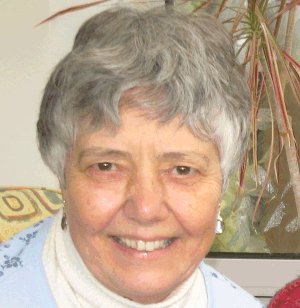 John Wijngaards shows how in the Church there is still so much outmoded tradition which is clearly in need of reform. In this readable book, which I heartily recommend, he draws upon personal experience as well as theological scholarship to get to the depths of this question: Can women be ordained priests in our church of today? His resounding ‘Yes’ comes through from his efforts to explore the mind of Jesus during his life and how it is manifested in our Christian sense of faith.