The risen Christ is our SUN
by John Wijngaards, Easter Sunday, 4th of April 2021
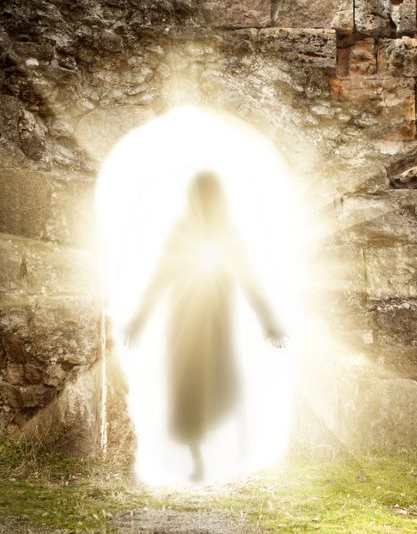 At Easter we glibly speak of resurrection without getting any closer to what Gnostics called ‘understanding’ it.
What does resurrection mean in practical terms? How does our Easter faith distinguish Christians from non-Christians? And if we who believe in Christ “have already passed from death to life” (John 5,24), that is: if resurrection starts now, what does it consist in and how can we know it? Paul said he knew the power of Christ’s resurrection (Phil 2,8-10). Then surely we should be able to know it too.
For our search, Gnostic writings may prove a help. Though Gnosticism strayed from Christianity into various heretical sects in the course of the centuries, it probably had one of its roots in the Johannine tradition and may have preserved some valuable Christian insights partly lost in other strands.
A Gnostic letter of around 200 AD states that resurrection is real for us Christians, because we ‘possess’ resurrection. “Resurrection of the spirit”, it says, “swallows resurrection of the psyche and resurrection of the flesh”. It then describes resurrection of the spirit as “being drawn upward by God as rays are drawn by the sun”.
Gnostic thinking
Gnostics commonly distinguished between three types of Christian: earthly, psychic and spiritual; corresponding to the Greek distinction in human beings of the material body, the psyche (animal soul) and the pneuma (spiritual soul). The three types expressed distinct pastoral categories which, interestingly enough, still have some relevance today.
- Material Christians are, for Gnostics, those Christians who have either never had, or have lost, any real spiritual dimension. The whole of religion is translated into material terms. Prayer means asking God for money or health. Weddings and funerals arc reduced to mere social functions.
- Psychic Christians, on the other hand, take the practice of their religion seriously. They believe revealed truth, receive the sacraments, honour Christian ethics. They fall short, according to Gnostics, in their level of awareness and of participation. Psychic Christians objectivise the truths of faith, making God speak and act as if God were human. They look on ritual and sacrament as quasi-magical sources of grace. Psychics believe the commandments were formulated by God himself/herself as the detailed guidelines of an anxious parent. In all this, Gnostics contend, psychics miss the characteristically spiritual dimension brought about by resurrection.
- Spiritual Christians, who have experienced “the resurrection of the spirit”, also accept the doctrines of faith, the sacramental dispensation and Christian moral principles. But having discovered that God is genuinely Spirit and is Spirit in themselves, they approach these realities as mysteries. God, they know, is infinitely beyond human categories and so we can only speak of God through image and metaphor. The sacraments heal and foster, as dynamic signs. Laws and regulations do not express God’s immutable decrees. They are human approximations distinct from Love which is God itself. Spiritual Christians are the true “Gnostics” (knowers) because they know God and spiritual realities directly.
Christ is our SUN
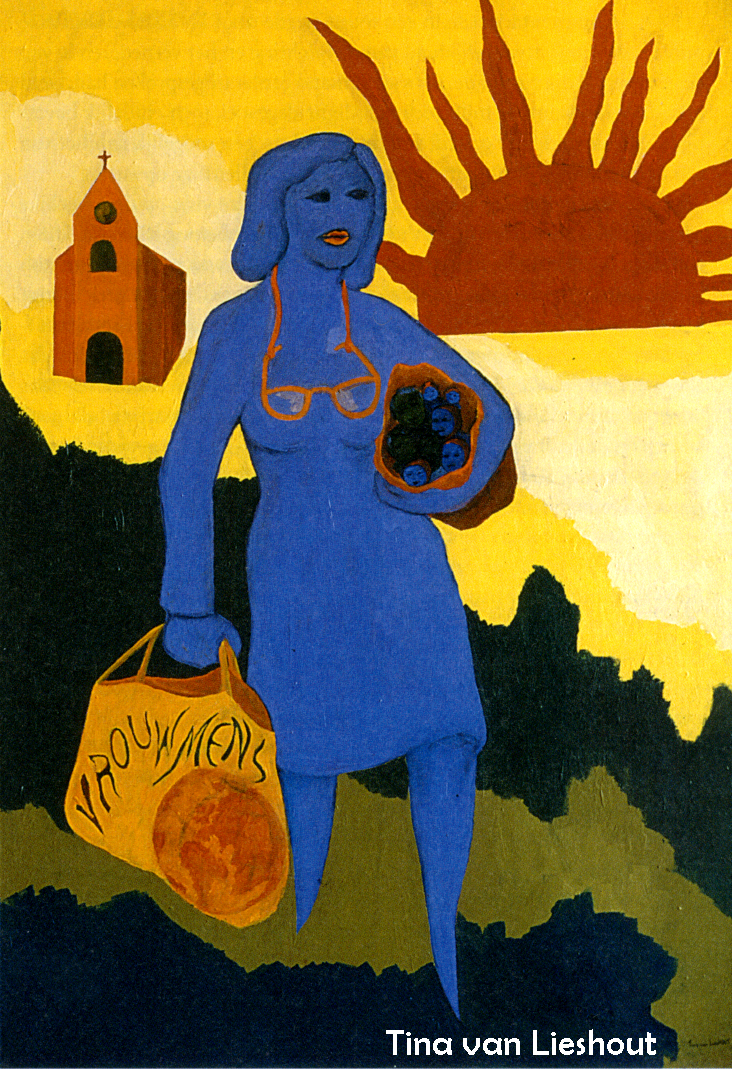
Remember: Gnostics describe resurrection of the spirit as “being drawn upward by God as rays are drawn by the sun”. What does this mean? All of us carry within us rays of light. Through resurrection we consciously relate these rays to their origin, to God, who is like the sun. God holds us fast, as the sun holds its rays, until our sunset, that is our physical death. Then God draws us back to himself/herself as the sun pulls back its rays. Through resurrection we discover we are light and start living in the day.
Now Gnostics were a varied and funny lot. Some were spiritual snobs. Some mixed their Christian beliefs with incompatible pagan philosophies. Some seem to have advocated bizarre forms of behaviour. They hardly were the kind of people to be universally trusted as spiritual guides. Yet they may have preserved valuable insights.
What does the Gnostic view of resurrection mean in practical terms? I am risen with Christ if I have become aware, in a tangible way, that God, who is above everything relates to me directly. This consciousness of resurrection shows itself clearly in that beautiful truly Christian knowledge that God is love. If I have this consciousness, I feel secure in his love. I know that whatever may happen to me and whatever my human weakness, God is there to forgive me and love me and pull me through. The realisation of God’s direct and personal love overcomes any fear I may have, even the fear of death.
I am still not fully risen with Christ, I am still a ‘psychic’ Christian, if I allow anything at all to take the place of my trust in God’s love. If my spirituality hardly rises above observance, it may well be that conformity has dethroned love in me. If I constantly feel scruples about external transgressions, my God may be fear. If I never meet God in a silent person-to-person encounter, I am missing out on my deepest potential in relationships. In all such cases the cure will probably require more than a gradual recovery. It calls for a true liberation, for an opening of my eyes to the reality of God’s love, for a resurrection of the spirit in me.
John Wijngaards
[abbreviated from an article I published in THE LONDON TIMES, Monday April 1 1991]

 I daresay anyone who’s part of CNWE, whether a longtime member or a relative newcomer, needs no introduction to the Vatican’s chief arguments against opening all ordained ministries to women, or why each argument is in its own way problematic. We would also not be the slightest bit surprised to learn that there is no hard proof that Jesus ever intended to exclude women from leadership in the community gathered in his name.
 Have you ever pondered the question: should women be ordained to the priesthood in the Roman Catholic Church? Or perhaps: why on earth can’t women be ordained today in this church? This book’s author has lived these questions for years, with a passion. Beginning in 1965, as a young priest, Wijngaards would experience first-hand the devastating results of a lack of church leadership in southern India, where he served for nearly twenty years. While he admittedly honors the teaching authority of the church, he’s also compelled to point out its errors—such as its position on slavery over the centuries. (In fact, he devotes an entire chapter of this book to this issue, as an example of the church’s devastating error.)