
Why can’t women be ordained priests?
by John Wijngaards
St Augustine portrayed all women as somehow tainted by sex. For like Eve, every woman, just by her possessing a sexually attractive body, was capable of seducing men to sinful carnal lust. Moreover, women ranked lower as human beings.
“It is the natural order among people”, St Augustine taught, “that women serve their husbands, because the justice of this lies in the principle that the lesser serves the greater . . . This is the natural justice that the weaker brain serve the stronger.”
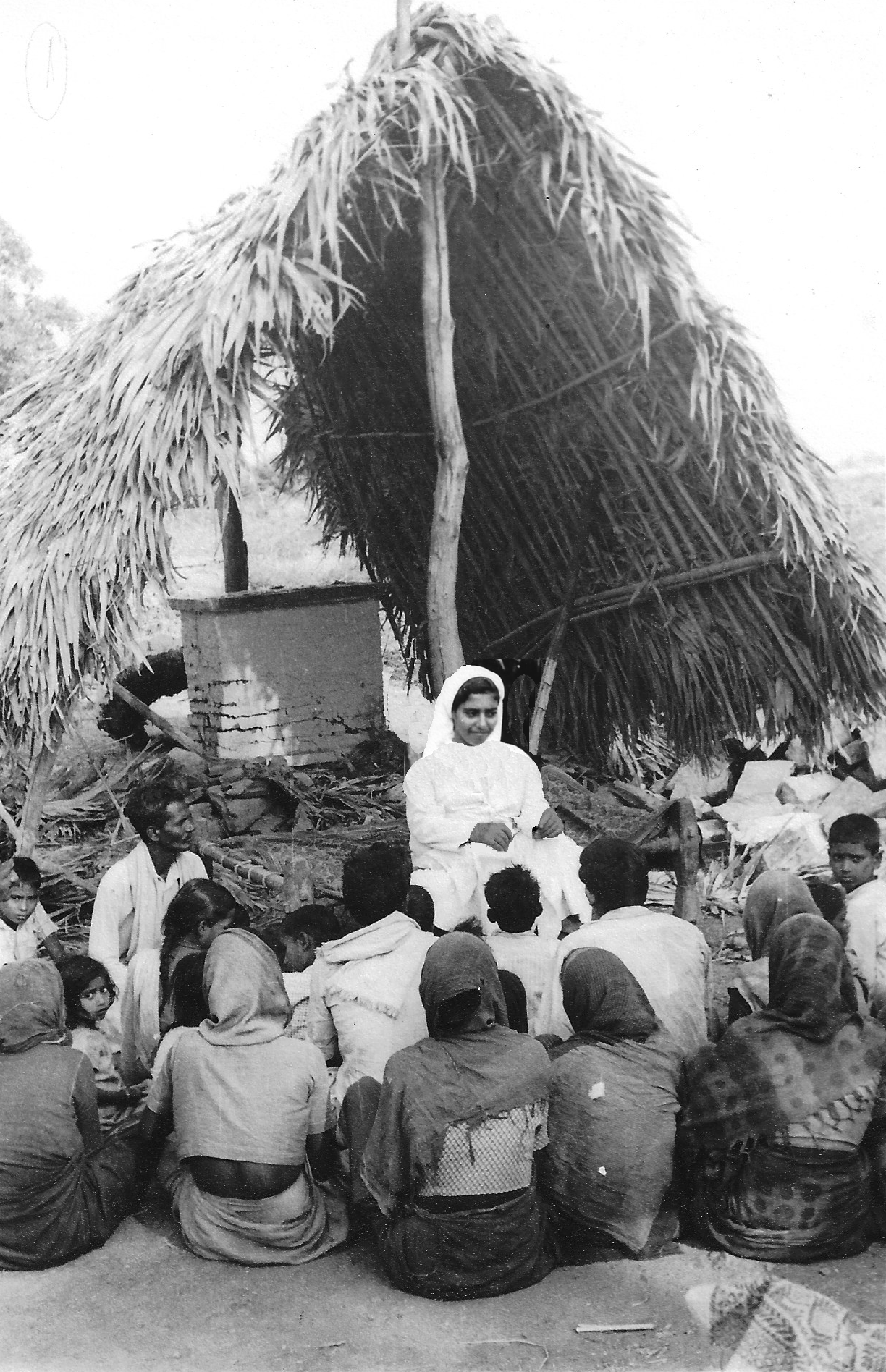
Such a judgment was all the more detrimental in a country like India. For women were repressed, socially as well as culturally. Proverbs will illustrate the point.
A proverb has been called ‘the wit of one person, but the wisdom of many’. Proverbs are brief, rhythmic or melodious expressions of generally accepted values. It will be remembered that Andhra Pradesh, the Indian State I was working in, was dominated by Telugus. Telugus honoured proverbs as containing principles and deep-seated convictions of their ‘inner language’. An appropriate proverb would prove a point and even settle an argument.
Among a well-known collection of 8,500 Telugu proverbs I found more than a hundred expressing judgements about women that are contrary to modern values and Catholic teaching. More disconcerting was the fact that 29 of them could be identified as commonly used even in our Christian communities. Some samples will speak for themselves:
- A boy born is like gold; a girl, dust on the road.
- Even if the child dies in birth, it is better if it is a boy.
- Even if she is the maharaja’s daughter, a woman is subject to her husband.
- A woman is spoiled by going outside the house; a man if he stays at home.
- Within her threshold she remains a woman; outside she is a donkey.
- It is better to be born a shrub in the desert than to be born a woman.
The popularity of such proverbs clearly demonstrated a failure to accept the full human and Christian dignity of women.
The root of the problem lay in generally accepted Hindu religious beliefs. I discovered that the Manusamhita, the Hindu classic laying down every person’s duties, teaches that a woman should always be subject to a man: first to her father, then to her husband, finally to her son. Women cannot pray or sacrifice independently. Their redemption consists solely in faithful servitude to their husbands. Women are by nature fickle, greedy, unreliable and unfaithful. They should be kept at home and under control. Here are some quotes from the book:
“The faithful wife must constantly worship her husband as a god, even if he be destitute of character or seeking pleasure elsewhere or is devoid of good qualities… Women have no sacrifices or fasts ordained for them. Neither are they called upon to perform the şraddhas [= rituals]. Their only duty is to serve and worship their husbands with respect and obedience. By the fulfilment of that duty alone they attain heaven… Woman was created for seducing man and hence there is nothing more detestable than a woman”.
This was still the generally accepted persuasion of Hindus all over India, in spite of the efforts of the government and enlightened circles to bring about a change. The same degrading of women persisted in many Catholic circles too. The husband dominated.
Why were women excluded from the priesthood in the Church?
While I became aware of this general paternalistic climate, I also made another discovery. The Church in India was preparing a research seminar on New Ministries in India. I was asked to study the possibility of more imaginative lay ministries for women.
When I delved deeper into the question, I found out the abysmal reasons for which women had been excluded from holy orders in the Catholic Church.
- “Women are inferior to men by nature.”
- “Women are not created in the image of God, as men are.”
- “Women are not perfect human beings and thus cannot represent Christ.”
- “Women have always been forbidden to touch sacred objects or wear sacred vestments.”
- “Women will soil the sanctuary during their monthly periods.”
- “Women are not perfect members of the Church.”
It shocked me no end. On reflection I realized the damage done – through the centuries. Jesus had established a radical equality between men and women. Men and women receive the same baptism. To all disciples he said at the Last Supper: “Do this in memory of me!” But the Church had perverted Jesus’ intention because of the prevailing social discrimination against women of the time.
Yes, the Church was criminally patriarchal. It so happened that not so long before I had met a religious sister who was principal of a large college for girls in a small town. I will call her ‘Rosita’ in this account.
The college possessed a chapel. Each morning at 6.30 am six sisters from the convent, ten Catholic teachers and more than 150 students from an adjoining hostel for village girls would come to attend Mass. A priest from the local parish would come to conduct the service. However, they had been deprived of the Eucharist for over a week.
“The parish priest is angry with me”, Rosita told me. “I contradicted him in public. He was wrong. But now, to punish us, he has stopped sending a priest for the past week. What is more, he has taken the key from the tabernacle so that I cannot even distribute holy communion – as I am allowed to do when a priest does not turn up to say Mass. Us women, we are at the total mercy of men!”
It was the kind of story I had heard before. I knew the priest. Rosita was in many ways intellectually superior. She had graduated from university with distinction in science and maths. He was not that clever. I reflected also that Rosita was a compassionate person, always at people’s service. So she possessed all the qualities needed to make a good priest. She would have done very well presiding at the Eucharist. But here she was, at the mercy of a man just because the Church withheld ordination from women for ridiculously outdated reasons…
Later I heard from her that the priest had resumed saying Mass in the college chapel, but for some weeks he would give Rosita only ‘half a host’ at holy communion – to show his continuing displeasure. It was a ludicrous gesture of course. Jesus is as much eucharistically present in half a consecrated host as in a complete host – which Rosita realized. It graphically demonstrated – on a local scale – the petty disdain held by the official Church towards women.
I will not repeat here all the ramifications of my original discovery. I have extensively narrated them in my publications Did Christ rule out women priests? (1977), The Ordination of Women in the Catholic Church (2001), No women in holy orders? (2002) and What they don’t teach you in Catholic College. Women in the priesthood and the mind of Christ (2020). These books also contain the solid academic evidence endorsing women’s ordination I collected over the decades. Moreover, I uploaded thousands of supporting documents on my website www.womenpriests.org.
 Excerpt from Chapter 21 in Ten Commandments for Church Reform. Memoirs of a Catholic Priest, by John Wijngaards (Acadian House Publishing 2021; 256 pages, 75 photographs).
The book is available in USA and UK bookshops. Main distributors are Acadian House in the USA – click here, and Gazelle Book Services in the UK – click here.
It can also be ordered through Amazon (USA: $ 20.90; UK: £ 15.78).
For more information about the book, read here!